Thursday, June 4, 2009

Buick Lexus


Buick Lexus
Lexus remained high in the rankings but has lost its crown after a 14 year reign. Despite this, Lexus and its parent company Toyota still had a total of nine different models ranking highest for each vehicle segment. In particular, the Lexus LS430 set the industry standard for dependability as it was the model with the fewest reported problems in the entire study, which is no small feat considering the number of gadgets the car comes with.

Buick has shown a dramatic improvement in quality over the years and today is a regular in the top five brand rankings. In fact, in 2007 Buick had tied with Lexus at the top, with many of its models found to be more reliable than those from the more expensive Cadillac brand. The rating for the industry as whole showed substantial improvements in just the last year, with an average of 170 problems per 100 vehicles, down 36 on last year’s result. This shows that many carmakers have improved the level of quality in their production and design processes and bodes well for consumers looking to save money by purchasing an older vehicle.

READ MORE - Buick Lexus

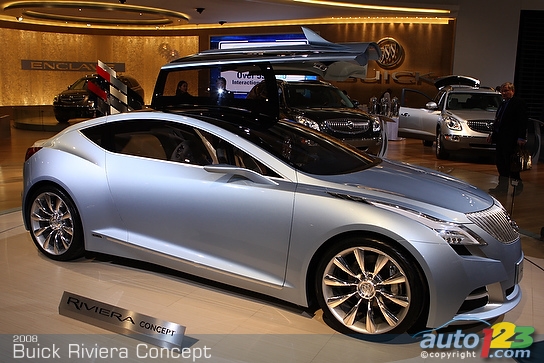
Buick Pictures


Buick Pictures
Buick is a marque of automobile sold in the United States, Canada, China, Taiwan, Qatar, Kuwait, and Israel by General Motors Corporation. It is GM's North America-based entry-level luxury brand. Buick originated as an independent motor car manufacturer, the Buick Motor Company, incorporated on May 19, 1903, by the Scottish-American David Dunbar Buick in Detroit, Michigan. Later that year, the struggling company was taken over by James H. Whiting (1842-1919), who moved it to his hometown of Flint, Michigan, and brought in William C. Durant in 1904 to manage his new acquisition. Buick sold his stock for a small sum upon departure, and died in modest circumstances twenty-five years later.

Between 1899 and 1902 two prototype vehicles were built in Detroit, Michigan by Walter Marr. Some documentation exists of the 1901 or 1902 prototype with tiller steering similar to the Oldsmobile Curved Dash. In mid-1904 another prototype was constructed for an endurance run, which convinced James H. Whiting to authorize production of the first models offered to the public. The architecture of this prototype was the basis for the Model B.

The first Buick made for sale, the 1904 Model B, was built in Flint, Michigan. There were 37 Buicks made that year, none of which survive. There are, however, two replicas in existence — the 1904 endurance car at the Buick Gallery & Research Center in Flint, and a Model B assembled by an enthusiast in California for the division's 100th anniversary. Both of these vehicles use various parts from Buicks of that early era, as well as fabricated parts. These vehicles were each constructed with the two known surviving 1904 engines. The power train and chassis architecture introduced on the Model B was continued through the 1909 Model F. The early success of Buick is attributed in part to the valve-in-head engine [10] patented by Eugene Richard. The creation of General Motors is attributed in part to the success of Buick, so it can be said Marr and Richard's designs directly led to GM.

The basic design of the 1904 Buick was optimally engineered even by today's standards. The flat-twin engine is inherently balanced, with torque presented to the chassis in a longitudinal manner, actually cancelling front end lift, rather than producing undesirable lateral motion. The engine was mounted amidships, now considered the optimal location. Durant was a natural promoter, and Buick soon became the largest car maker in America. Using the profits from this, Durant embarked on a series of corporate acquisitions, calling the new mega-corporation General Motors. At first, the manufacturers comprising General Motors competed against each other, but Durant ended that. He wanted each General Motors division to target one class of buyer, and in his new scheme Buick was near the top — only the Cadillac brand had more prestige. This is the position Buick occupies to this day in the General Motors lineup.

At first, Buick followed the likes of Napier in automobile racing, winning the first-ever race held at Indianapolis Motor Speedway. In 1911, Buick introduced its first closed-body car, four years ahead of Ford. In 1929, Buick Motor Division launched the Marquette sister brand, designed to bridge the price gap between Buick and Oldsmobile; however, Marquette was discontinued in 1930. The model name Century came about when Buick was designing its first production automobile capable of reaching a speed of 100mph. The division needed to come up with a name. One of the Buick executives had returned from a recent trip to the British isles and told the other executives that the British referred to going 100mph as "doing the century". The executives liked the Century name and it stuck.

Overall sales of the Buick brand peaked in the 1984 model year, when falling oil prices and the prevailing economic recovery buoyed the sales of traditional full-sized automobiles, in combination with the popularity of newer, smaller offerings and performance oriented turbocharged models. Subsequently, sales fell as downsized premium luxury coupe, full-sized and mid-sized models were poorly received by the public in the period between 1985 and 1990. The number of Buick models on offer fell over time, with the compact and performance segments being abandoned altogether. The ideal Buick customer is comfortably well off, possibly not quite rich enough to afford a Cadillac, nor desiring the ostentation of one, but definitely in the market for a car above the norm. Over time Buick has become a traditional luxury brand in the GM group whereas Cadillac has focused more on cutting edge products.

Buick began consolidating its lineup in 2005, replacing the Century and Regal with the LaCrosse (known as the Buick Allure in Canada), and the LeSabre and Park Avenue with the Lucerne in 2006. Both of its SUVs, the Rendezvous and Rainier were discontinued in 2007 to make way for the new and highly successful 2008 Enclave, while the slow-selling Terraza minivan was also dropped for 2008. This left the marque with just three models in the United States. In 2008, Buick sales slipped from an average of four cars per dealer per month to three, in addition to two trucks. Speculation existed, however, as to whether GM would eliminate the Buick brand to cut costs. This followed the temporary suspension of GM's planned Zeta project to develop new rear wheel drive cars fitting the Buick market niche. GM also has started consolidating of Buick, Pontiac, and GMC trucks into single dealer franchises, which would make it simple to eliminate the Buick brand without leaving dealers devoid of product. However, with the development of the Zeta platform still ongoing (including the development of the 2006 VE Commodore and the new Chevrolet Camaro), it may be likely that Buick will survive. In January 2009, Buick unveiled the new 2010 LaCrosse sedan, a radical departure from the model it will replace in mid-2009 and from Buicks of the recent past. So far, the car has drawn praise from critics and auto journalists and adds another bright spot to Buick's stable. There have been rumors on Edmund's and Motor Trend that Buick will have a roadster sedan in 2010.
READ MORE - Buick Pictures

Buick Pictures


Buick Pictures
Buick is a marque of automobile sold in the United States, Canada, China, Taiwan, Qatar, Kuwait, and Israel by General Motors Corporation. It is GM's North America-based entry-level luxury brand. Buick originated as an independent motor car manufacturer, the Buick Motor Company, incorporated on May 19, 1903, by the Scottish-American David Dunbar Buick in Detroit, Michigan. Later that year, the struggling company was taken over by James H. Whiting (1842-1919), who moved it to his hometown of Flint, Michigan, and brought in William C. Durant in 1904 to manage his new acquisition. Buick sold his stock for a small sum upon departure, and died in modest circumstances twenty-five years later.

Between 1899 and 1902 two prototype vehicles were built in Detroit, Michigan by Walter Marr. Some documentation exists of the 1901 or 1902 prototype with tiller steering similar to the Oldsmobile Curved Dash. In mid-1904 another prototype was constructed for an endurance run, which convinced James H. Whiting to authorize production of the first models offered to the public. The architecture of this prototype was the basis for the Model B.

The first Buick made for sale, the 1904 Model B, was built in Flint, Michigan. There were 37 Buicks made that year, none of which survive. There are, however, two replicas in existence — the 1904 endurance car at the Buick Gallery & Research Center in Flint, and a Model B assembled by an enthusiast in California for the division's 100th anniversary. Both of these vehicles use various parts from Buicks of that early era, as well as fabricated parts. These vehicles were each constructed with the two known surviving 1904 engines. The power train and chassis architecture introduced on the Model B was continued through the 1909 Model F. The early success of Buick is attributed in part to the valve-in-head engine [10] patented by Eugene Richard. The creation of General Motors is attributed in part to the success of Buick, so it can be said Marr and Richard's designs directly led to GM.

The basic design of the 1904 Buick was optimally engineered even by today's standards. The flat-twin engine is inherently balanced, with torque presented to the chassis in a longitudinal manner, actually cancelling front end lift, rather than producing undesirable lateral motion. The engine was mounted amidships, now considered the optimal location. Durant was a natural promoter, and Buick soon became the largest car maker in America. Using the profits from this, Durant embarked on a series of corporate acquisitions, calling the new mega-corporation General Motors. At first, the manufacturers comprising General Motors competed against each other, but Durant ended that. He wanted each General Motors division to target one class of buyer, and in his new scheme Buick was near the top — only the Cadillac brand had more prestige. This is the position Buick occupies to this day in the General Motors lineup.

At first, Buick followed the likes of Napier in automobile racing, winning the first-ever race held at Indianapolis Motor Speedway. In 1911, Buick introduced its first closed-body car, four years ahead of Ford. In 1929, Buick Motor Division launched the Marquette sister brand, designed to bridge the price gap between Buick and Oldsmobile; however, Marquette was discontinued in 1930. The model name Century came about when Buick was designing its first production automobile capable of reaching a speed of 100mph. The division needed to come up with a name. One of the Buick executives had returned from a recent trip to the British isles and told the other executives that the British referred to going 100mph as "doing the century". The executives liked the Century name and it stuck.

Overall sales of the Buick brand peaked in the 1984 model year, when falling oil prices and the prevailing economic recovery buoyed the sales of traditional full-sized automobiles, in combination with the popularity of newer, smaller offerings and performance oriented turbocharged models. Subsequently, sales fell as downsized premium luxury coupe, full-sized and mid-sized models were poorly received by the public in the period between 1985 and 1990. The number of Buick models on offer fell over time, with the compact and performance segments being abandoned altogether. The ideal Buick customer is comfortably well off, possibly not quite rich enough to afford a Cadillac, nor desiring the ostentation of one, but definitely in the market for a car above the norm. Over time Buick has become a traditional luxury brand in the GM group whereas Cadillac has focused more on cutting edge products.

Buick began consolidating its lineup in 2005, replacing the Century and Regal with the LaCrosse (known as the Buick Allure in Canada), and the LeSabre and Park Avenue with the Lucerne in 2006. Both of its SUVs, the Rendezvous and Rainier were discontinued in 2007 to make way for the new and highly successful 2008 Enclave, while the slow-selling Terraza minivan was also dropped for 2008. This left the marque with just three models in the United States. In 2008, Buick sales slipped from an average of four cars per dealer per month to three, in addition to two trucks. Speculation existed, however, as to whether GM would eliminate the Buick brand to cut costs. This followed the temporary suspension of GM's planned Zeta project to develop new rear wheel drive cars fitting the Buick market niche. GM also has started consolidating of Buick, Pontiac, and GMC trucks into single dealer franchises, which would make it simple to eliminate the Buick brand without leaving dealers devoid of product. However, with the development of the Zeta platform still ongoing (including the development of the 2006 VE Commodore and the new Chevrolet Camaro), it may be likely that Buick will survive. In January 2009, Buick unveiled the new 2010 LaCrosse sedan, a radical departure from the model it will replace in mid-2009 and from Buicks of the recent past. So far, the car has drawn praise from critics and auto journalists and adds another bright spot to Buick's stable. There have been rumors on Edmund's and Motor Trend that Buick will have a roadster sedan in 2010.
READ MORE - Buick Pictures

Car 2009 Jaguar XJ Portfolio - 2008 Gneva Auto Show

READ MORE - Car 2009 Jaguar XJ Portfolio - 2008 Gneva Auto Show

Wednesday, June 3, 2009

Fashion 2009 Nissan 350Z Cars

2009 Nissan 350Z Car
Fashion 2009 Nissan 350Z Cars
Prices : $36,870 - $42,570
It has 306-hp 3.5-liter V6
engine with a 6 or 5-speed
automatic transmission.It
include the Mazda MX-5,
Mini Cooper, and Scion tC.

Fashion 2009 Nissan 350Z Car Side Window

Fashion 2009 Nissan 350Z Car

Fashion 2009 Nissan 350Z Car Insurances

Quote Insurances

Posh 2009 Nissan 350Z Car Engine
READ MORE - Fashion 2009 Nissan 350Z Cars

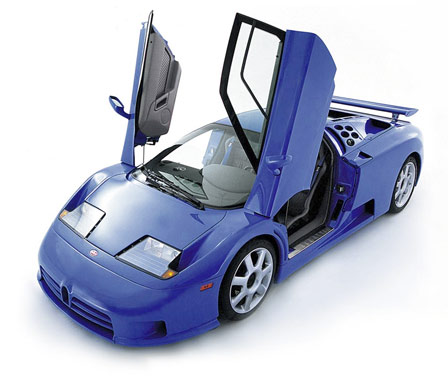
The Bugatti Supercar


The Bugatti Supercar
The Bugatti Veyron is the automotive equivalent of the unicorn. The Bugatti name exudes class and pedigree. (Ralph Lauren owns three vintage Bugattis in addition to a Veyron.) This is precisely why I jumped at the chance to drive the brand's newest flagship, the 16-cylinder, quad-turbocharged Veyron, along the California coastal path connecting Monterey and Half Moon Bay. My escort was to be Pierre-Henri Raphanel, a former French race-car driver and Bugatti's chief ambassador who typically co-pilots the test runs.

My encounter with the Veyron came in mid-August on the heels of the Pebble Beach Concours d'Elegance, one of the world's most fabulous vintage-car extravaganzas. All the high-society auto buffs in attendance were staying at my hotel, and the parking lot contained enough precious metal to warrant its own admission fee. As I was walking outside on the morning of my drive, I was gazing so intently at all the prancing horses, winged B's, raging bulls, and other purebreds that I almost missed the grand entrance of the yellow-on-black Veyron.
READ MORE - The Bugatti Supercar

The Bugatti Supercar


The Bugatti Supercar
The Bugatti Veyron is the automotive equivalent of the unicorn. The Bugatti name exudes class and pedigree. (Ralph Lauren owns three vintage Bugattis in addition to a Veyron.) This is precisely why I jumped at the chance to drive the brand's newest flagship, the 16-cylinder, quad-turbocharged Veyron, along the California coastal path connecting Monterey and Half Moon Bay. My escort was to be Pierre-Henri Raphanel, a former French race-car driver and Bugatti's chief ambassador who typically co-pilots the test runs.

My encounter with the Veyron came in mid-August on the heels of the Pebble Beach Concours d'Elegance, one of the world's most fabulous vintage-car extravaganzas. All the high-society auto buffs in attendance were staying at my hotel, and the parking lot contained enough precious metal to warrant its own admission fee. As I was walking outside on the morning of my drive, I was gazing so intently at all the prancing horses, winged B's, raging bulls, and other purebreds that I almost missed the grand entrance of the yellow-on-black Veyron.
READ MORE - The Bugatti Supercar

The Bugatti


The Bugatti
Bugatti was founded in Molsheim, France, as a manufacturer of high performance automobiles by Ettore Bugatti, an Italian man described as an eccentric genius. The original company is legendary for producing some of the most exclusive cars in the world as well as some of the fastest. The original Bugatti brand failed with the coming of World War II, like many high-end marques of the time. The death of Ettore's son Jean was also a contributory factor. The company struggled financially and released one last model in the 1950s before eventually being purchased for its airplane parts business in the 1960s. Today the name is owned by Volkswagen Group who have revived it as a builder of very limited production sports cars.

Bugatti's cars were as much works of art as they were mechanical creations. Engine blocks were hand scraped to ensure that the surfaces were so flat that gaskets were not required for sealing, to engine turned finishes on many of the exposed surfaces of the engine compartment, and safety wires threaded through almost every fastener in intricately laced patterns. Rather than bolt the springs to the axles as most manufacturers did, Bugatti's axles were forged such that the spring passed though a carefully sized opening in the axle, a much more elegant solution requiring fewer parts. He famously described his arch competitor Bentley's cars as "the world's fastest lorries" for focusing on durability. According to Bugatti, weight was the enemy. Bugatti’s inspiring creations attracted many people from other fields of interest, like Arlen Ness who created a motorcycle, called “Smooth-Ness”, with the Bugatti style. He was inspired by the smoothness of a bronze casting of a Bugatti automobile.2
READ MORE - The Bugatti

The Bugatti


The Bugatti
Bugatti was founded in Molsheim, France, as a manufacturer of high performance automobiles by Ettore Bugatti, an Italian man described as an eccentric genius. The original company is legendary for producing some of the most exclusive cars in the world as well as some of the fastest. The original Bugatti brand failed with the coming of World War II, like many high-end marques of the time. The death of Ettore's son Jean was also a contributory factor. The company struggled financially and released one last model in the 1950s before eventually being purchased for its airplane parts business in the 1960s. Today the name is owned by Volkswagen Group who have revived it as a builder of very limited production sports cars.

Bugatti's cars were as much works of art as they were mechanical creations. Engine blocks were hand scraped to ensure that the surfaces were so flat that gaskets were not required for sealing, to engine turned finishes on many of the exposed surfaces of the engine compartment, and safety wires threaded through almost every fastener in intricately laced patterns. Rather than bolt the springs to the axles as most manufacturers did, Bugatti's axles were forged such that the spring passed though a carefully sized opening in the axle, a much more elegant solution requiring fewer parts. He famously described his arch competitor Bentley's cars as "the world's fastest lorries" for focusing on durability. According to Bugatti, weight was the enemy. Bugatti’s inspiring creations attracted many people from other fields of interest, like Arlen Ness who created a motorcycle, called “Smooth-Ness”, with the Bugatti style. He was inspired by the smoothness of a bronze casting of a Bugatti automobile.2
READ MORE - The Bugatti

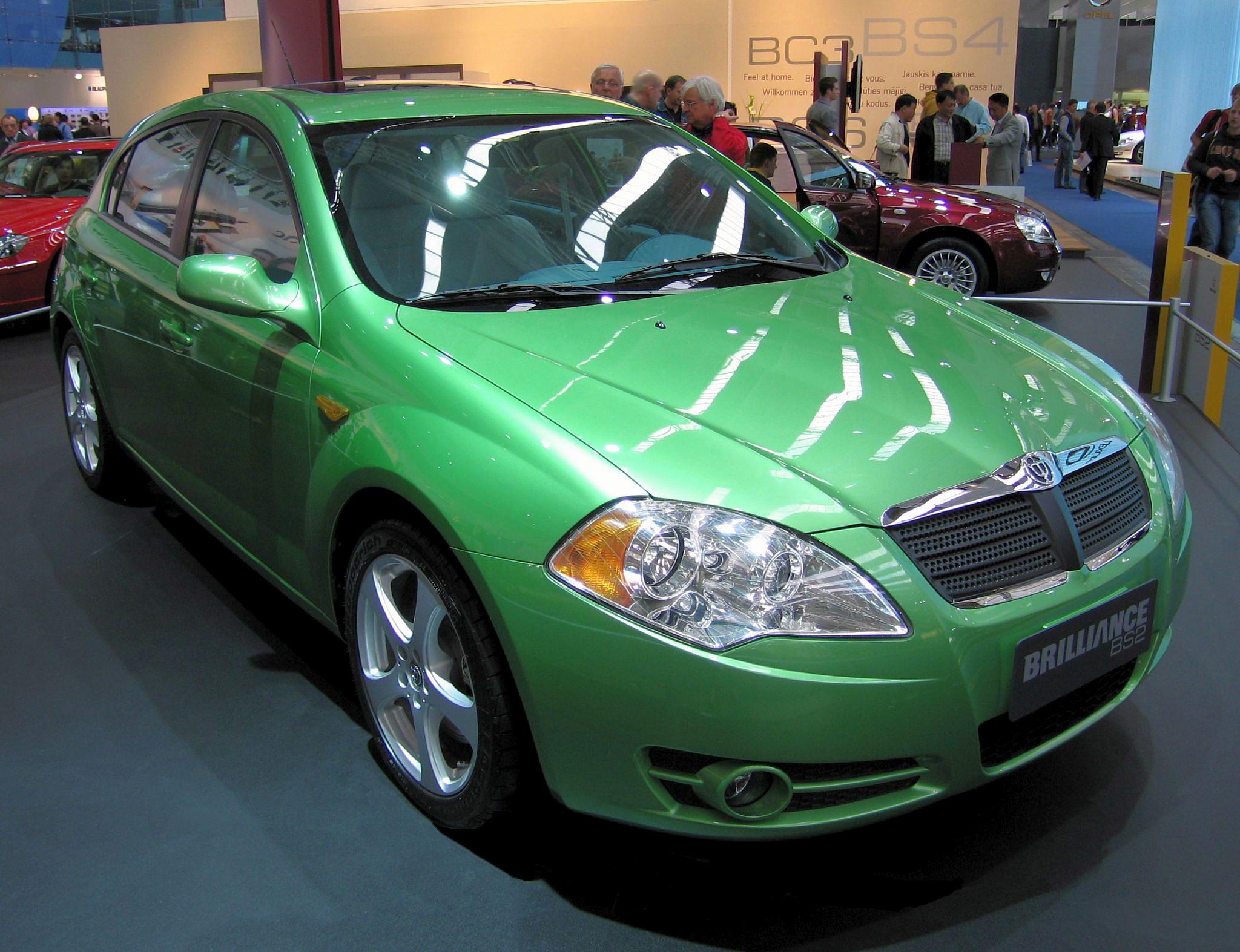
The Brilliance


At Brilliance, we are diamond and fine jewelry experts who have been in business for over twenty years. We own the diamonds, we own the metals, and we manufacturer our own fine jewelry. We'll guide you through the buying process with honesty and clarity. We'll help you make sense of your choices.

The Jinjue, Brilliance’s second passenger car, could win over North American and even picky European buyers if launched in western markets, on styling alone - the automaker already sells a larger model in Europe having been designed by Giorgetto (Giorgio) Giugiaro’s ItalDesign. With another link to the Olympics, the new model was designed in Italy by ItalDesign’s rival, the world renowned Pininfarina; design house to many Ferrari sports cars and other top-level vehicles.
READ MORE - The Brilliance

The Brilliance


At Brilliance, we are diamond and fine jewelry experts who have been in business for over twenty years. We own the diamonds, we own the metals, and we manufacturer our own fine jewelry. We'll guide you through the buying process with honesty and clarity. We'll help you make sense of your choices.

The Jinjue, Brilliance’s second passenger car, could win over North American and even picky European buyers if launched in western markets, on styling alone - the automaker already sells a larger model in Europe having been designed by Giorgetto (Giorgio) Giugiaro’s ItalDesign. With another link to the Olympics, the new model was designed in Italy by ItalDesign’s rival, the world renowned Pininfarina; design house to many Ferrari sports cars and other top-level vehicles.
READ MORE - The Brilliance

The Aston Martin Lagonda


The Aston Martin Lagonda
The Aston Martin Lagonda was a luxury four-door sedan (saloon) built by Aston Martin of Newport Pagnell, England, between 1976 and 1989. 645 examples of this model were produced and the average selling price was £150,000. Aston Martin was about to go out of business in the mid-1970s and needed something to bring in some much-needed funds. Traditionally, Aston Martin had worked on 2+2 sports cars, but the Lagonda — the model being named after a grand sporting marque — was a four-door saloon with a brand new V8 engine. As soon as it was introduced, it drew in hundreds of deposits from potential customers, helping Aston Martin's cash reserves.

The car was designed by William Towns in an extreme interpretation of the classic 1970s "folded paper" style. It was as unconventional a design then as it is now. Car enthusiasts are fiercely divided on the car's aesthetic value. Throughout the history of the marque, these hand-built Lagondas were amongst the most expensive saloons in the world. The only other "production" cars to approach its lofty price tag were the Rolls-Royce Silver Spirit/Silver Spur, Bentley Mulsanne, and Maserati Quattroporte.
READ MORE - The Aston Martin Lagonda

LinkWithin

Related Posts Plugin for WordPress, Blogger...