Automotive Review, Car Specification, Car Price List, New Car News and Design Concept Technology, Car First Test Drive, Car Spareparts, Car Accessories, Car Modification, Extreme Car Technology, Automobile Show News Update and Automotive Wallpaper Pictures Gallery
Here are 10 of the worlds fastest cars of 2008-2009 available on the market and measured by their top speeds.
1. SSC Ultimate Aero 257 mph+, 0-60 in 2.7 secs. Twin-Turbo V8 Engine with 1183 hp, base price is $654,400. Tested in March 2007 by Guinness world records, the SSC Ultimate Aero takes the lead as the fastest car in the world beating Bugatti Veyron.
Fastest Car In The World SSC Ultimate Aero
Promo Video of SSC Ultimate Aero
2. Bugatti Veyron 253 mph+, 0-60 in 2.5 secs. Aluminum, Narrow Angle W16 Engine with 1001 hp, base price is $1,444,000. With the highest price tag, no wonder this is rank #2.
Bugatti Veyron most expensive car in the world
3. Koenigsegg CCX 250 mph+, 0-60 in 3.2 secs. 90 Degree V8 Engine 806 hp, base price is $695,000. Made in Sweden, it is expected to take #1 spot in the future.
Koenigsegg CCX
4. Saleen S7 Twin-Turbo 248 mph+, 0-60 in 3.2 secs. Twin Turbo All Aluminum V8 Engine with 750 hp, base price is $555,000. Smooth and bad-ášš, will make you want to show it off non-stop.
Saleen S7 Twin Turbo
5. McLaren F1 240 mph+, 0-60 in 3.2 secs. BMW S70/2 60 Degree V12 Engine with 627 hp, base price is $970,000.
Mclaren F1
6. Ferrari Enzo 217 mph+, 0-60 in 3.4 secs. F140 Aluminum V12 Engine with 660 hp, base price is $670,000. Only 399 ever produced, the price goes up every time someone crashes.
Ferrari Enzo
7. Jaguar XJ220 217 mph+, 0-60 in 4.0 secs. Twin Turbo V6 Engine with 542 hp, base price is $345,000. Made in 1992, this car still got what it takes to make the list.
Jaguar XJ 220
8. Pagani Zonda F 215 mph+, 0-60 in 3.5 secs. Mercedes Benz M180 V12 Engine with 650 hp, base price is $741,000. With a V12 motor, this baby can do much better.
Pagani Zonda F
9. Lamborghini Murcielago LP640 213 mph+, 0-60 in 3.3 secs. V12 Engine with 640 hp, base price is $430,000. Nice piece of art, the design is very round and smooth.
Lamborghini Murcielago
10. Porsche Carrera GT 209 mph+, 0-60 in 3.9 secs. Aluminum, 68 Degree, Water Cooled V10 Engine with 612 hp, base price is $440,000. The Porsche most expensive car made the list as #10.
The limited-production, hand-built, high-performance Saleen S7 Twin Turbo was Saleen's first car not based on an existing design. It was completely developed digitally using tools such as Unigraphics and Rhinoceros 3D. It may have been born on a computer, but it came to life on the track. The heart of the S7 is a 427.6 cu inch all-aluminum OHV V8 engine, upgraded with two Garrett turbochargers producing approximately 6 psi of boost. This gives the S7 750 horsepower and 700 lb·ft of torque. What does this translate into on the track? 0-60 mph in 3.2 seconds, 0-100 in 6.2 seconds and 0-200 mph (yes, 0-200) in 27 seconds. This also allows the S7 to blast through the quarter mile in 10.6 seconds and gives it a top speed of 248 mph. And get this, in 2006, Saleen offered an optional competition package for the S7 Twin Turbo that put the engine output up to 1000 horsepower! How much will this land rocket set you back? Around $585,296.
The SSC Ultimate Aero TT may be the only rival to the Bugatti Veyron. In road tests, the SSC turned in a 254.88 mph top speed compared to the 253 mph of the Veyron. But the Ultimate Aero accelerates from 0-60 mph in 2.78 seconds which is slower than the Veyron's 0-60 in 2.46 seconds. The engine in the Ultimate Aero model is a supercharged 387.2 cu in (6.35 L) V8 engine rated at 1,183 bhp , with 1,094 ft·lb of torque. Amazingly, the first production 2007 Ultimate Aero TT car was sold not in a show room, but on eBay for $431,100. Yes eBay. And I forgot to mention that the SSC Ultimate Aero TT is built by Shelby SuperCars. And that NASA (yes NASA) put the car in a wind tunnel testing facility and proved that the SSC Aero could be aerodynamically stable enough to reach speeds up to 273 miles per hour. And to be as Green as anyone else, this supercar will soon be available in an electrical version. Of course this SSC will be the fastest electric car on the market, powered by a 500 horsepower electric motor. Yes I said a 500 horsepower ELECTRIC motor.
This was an evolution of the Low Drag Coupé. This Jaguar made extensive use of aluminium alloy in the body panels and other components. However, with at least one exception, it remained an open-top car in like the D-type to which this car is a more direct successor than the production E-type which is more of a GT than a sports car. The cars used a tuned version of the production 3.8 litre Jaguar engine with 300 bhp (224 kW)) output rather than the 265 bhp (198 kW) produced by the "ordinary" version. At least one car is known to have been fitted with fuel-injection.
The cars were entered in various races but, unlike the C-Type and D-Type racing cars, they did not win at Le Mans or Sebring.
Bob Jane won the 1963 Australian GT Championship at the wheel of an E Type.
The Jaguar E-type was very successful in SCCA Production sports car racing with Group44 and Bob Tullius taking the B-Production championship with a Series-3 V12 racer in 1975. A few years later, Gran-Turismo Jaguar from Cleveland Ohio campaigned a 4.2 L 6 cylinder FHC racer in SCCA production series and in 1980, won the National Championship in the SCCA C-Production Class defeating a fully funded factory Nissan Z-car team with Paul Newman.
After the introduction of the E-type, Jaguar wanted to investigate the possibility of building a car more in the spirit of the D-type racer from which elements of the E-type's styling and design were derived. One car was built to test the concept designed as a coupé as its monocoque design could only be made rigid enough for racing by using the "stressed skin" principle. Previous Jaguar racers were built as open-top cars because they were based on ladder frame designs with independent chassis and bodies. Unlike the steel production E-types the LDC used lightweight aluminium. Sayer kept the original tub with lighter outer panels riveted and glued to it. The front steel sub frame remained intact, the windshield was given a more pronounced slope and the rear hatch welded shut. Rear brake cooling ducts were located next to the rear windows,and the interior trim was discarded, with only insulation around the transmission tunnel. With the exception of the windscreen, all cockpit glass was plexi. A tuned version of Jaguars 3.8 litre engine with a wide angle cylinder-head design tested on the "D" type racers was used. Air management became a major problem and, although much sexier looking and certainly faster than a production "E" type, the car was never competitive: the faster it went, the more it wanted to do what its design dictated: take off.
The one and only test bed car was completed in summer of 1962 but was sold a year later to Jaguar racing driver Dick Protheroe who raced it extensively and eventually sold it. Since then it has passed through the hands of several collectors on both sides of the Atlantic and now is believed to reside in the private collection of the current Viscount Cowdray.
A new 5.3 L 12-cylinder Jaguar V12 engine was introduced, with uprated brakes and standard power steering. The short wheelbase FHC body style was discontinued and the V-12 was available only as a convertible and 2+2 coupe. The convertible used the longer-wheelbase 2+2 floorpan. It is easily identifiable by the aggressive, slatted front grill in place of the mouth of earlier cars, flared wheel arches and a badge on the rear that proclaims it to be a V12. There were also a very limited number of 4.2 litre six cylinder Series 3 E-Types built. These were featured in the initial sales literature. It is believed these are the rarest of all E-types of any remaining.
The series 2 E-type Jaguar ran from 1966 to 1971. Open headlights without glass covers, a wrap-around rear bumper, re-positioned and larger front indicators and taillights below the bumpers, better cooling aided by an enlarged "mouth" and twin electric fans, and uprated brakes are hallmarks of Series 2 E-type cars. De-tuned in US, but still with triple SUs in the UK, the engine is easily identified visually by the change from smooth polished cam covers to a more industrial 'ribbed' appearance. Late Series 1½ cars also had ribbed cam covers. The interior and dashboard were also redesigned, with flick switches being substituted for rocker switches that met U.S health and safety regulations. The dashboard switches also lost their symmetrical layout. New seats were fitted, which purists claim lacked the style of the originals but were certainly more comfortable. Air conditioning and power steering were available as factory options. It was available in FHC, OTS, and 2+2 versions.
The Jaguar E-type or XK-E was manufactured by Jaguar between the years of 1961 and 1974. The E-type revolutionized sports car design, with performance, handling and looks ahead of its time. It was priced well below competing models, helping it to high sales for a high performance car. In excess of 70,000 E-types were sold over 14 years.
It is often referred to as the E-Type Jag.
In March 2008, the Jaguar E-type ranked first in Daily Telegraph list of the "100 most beautiful cars" of all time. In 2004, Sports Car International named this car number one on the list of Top Sports Cars of the 1960s.
The Series 1 was introduced in March 1961, using the triple SU carburetted 3.8 litre 6-cylinder Jaguar XK6 engine from the XK150S. The first 500 cars built had flat floors and external hood latches. These cars are rare and more valuable. After that, the floors were dished to provide more leg room and the twin hood latches moved to inside the car. The 3.8 litre engine was increased to 4.2 litres in late 1964.
All E-Types featured independent rear suspension with torsion bar front ends, and power-assisted disc brakes. Jaguar was the first auto manufacturer to equip cars with disc brakes as standard.
The Series 1 can be recognized by glass covered headlights (up to 1967), small "mouth" opening at the front, signal lights and tail-lights above bumpers and exhaust tips under the license plate in the rear.
3.8 litre cars have leather-upholstered bucket seats, an aluminum-trimmed centre instrument panel and console (changed to vinyl and leather in 1963), and a 4-speed gearbox that lacks synchromesh for 1st gear ("Moss box"). 4.2 litre cars have more comfortable seats, improved brakes and electrical systems, and an all-synchromesh 4-speed gearbox. 4.2 litre cars also have a badge on the boot proclaiming "Jaguar 4.2 Litre E-type" (3.8 cars have a simple "Jaguar" badge). Optional extras included Chrome Wire wheels and a detachable hard top for the Open Two Seater.
A 2+2 version of the coupe was added in 1966. The 2+2 offered the option of an automatic transmission. The body is slightly longer and the roof angles are different. The roadster remained a strict two-seater.
There was a transitional series of cars built in 1967-68, unofficially called "Series 1½", which are externally similar to Series 1 cars. Because of the American pressure the new features were open headlights, different switches, and some de-tuning (with a downgrade of twin Zenith-Stromberg carbs from the original triple SU carbs) for US models. Some Series 1½ cars also have twin cooling fans and adjustable seat backs. Series 2 features were gradually introduced into the Series 1, creating the unofficial Series 1½ cars, but always with the Series 1 body style.
The Jaguar XK150 was a sports car produced by Jaguar between 1957 and 1961. It replaced the previous XK140.
Jaguar XK150Initially it was available in Fixed Head Coupe (FHC) and Drop Head Coupe (DHC) versions. The Open Two Seater (OTS) Roadster model was not launched until 1958. Token rear seats were fitted in the coupes.
Although having a family resemblance to the XK120 and XK140, the XK150 was radically modernized. For the first time a one piece windscreen was used and the wing line no longer dropped as much over the doors. The bonnet was widened and opened down to the wings and on the OTS the bulkhead was moved back to make it about 4 inches (102 mm) longer. The car was available at various times in Red, Pearl Grey, White, Indigo Blue, Claret, Cots wold Blue, Black, Mist Grey, Sherwood Green, Carmen Red, British racing Green, Cornish grey and Imperial Maroon.
Inside the car the walnut dashboard went, to be replaced by one trimmed in leather. On the early Drop Head Coupes, an aluminum center dash panel with an X pattern engraving was fitted which looked similar to the early 3.8 E-type. It was discontinued after June 1958. The doors were thinner giving more interior space.
The standard engine, the same as fitted to the XK140, was the 3.4 litre DOHC Jaguar straight-6 rated at 180 SAE bhp at 5750 rpm but most cars were fitted with the SE engine that had a modified cylinder head with larger exhaust valves rated at 210 SAE bhp at 5500 rpm. Twin 1.75 inch SU HD6 carburettors were fitted. In 1958 the S model was launched with three 2 inch SU HD8 carburettors and a straight ports cylinder head giving a claimed 250 SAE bhp. The engine capacity was increased in 1958 to 3.8 liters by increasing the bore. Claimed output was now 220 bhp for the standard and 265 SAE bhp for the S version.
Four-wheel disc brakes appeared for the first time although it was theoretically possible to order a car with drums. Either wire wheels or disc wheels could be specified. Suspension and chassis were very similar to that on the XK140. Steering was by rack and pinion; power steering was not offered.
Production totaled 2265 Roadsters, 4445 Fixed Head Coupes and 2672 Drop Head Coupes.
technorati tags: Jaguar XK150, car, car parts, cars, classic cars, cool cars, Daimler Motor Company, fast cars, hot cars, jaguar, muscle cars, sports cars, Tata Motors
The Jaguar XK140 was a sports car manufactured by Jaguar between 1954 and 1957. Upgrades over its predecessor, the XK120, included better brakes, rack and pinion steering, and modern tube type shock absorbers instead of the older lever arm design. The name referred to its 140 mph (225 km/h) top speed. The XK140 continued to feature the famous Jaguar XK engine with the SE mods from the XK120 as standard, now delivering 190 bhp (142 kW) at 5750 rpm. The special C-Type cylinder head was also carried through from the XK120 catalogue as an option, providing 210 bhp (157 kW).
With the introduction of the XK140 in late 1954 (all sold as 1955 models), the primary visual change was the more substantial front and rear bumpers, with large overriders. Another new feature was the provision of modern flashing direction indicators, operated by a separate switch on the dash. The twin amber lights positioned above the front bumper helped to distinguish the XK140 - until XK120 owners started installing the same equipment. The front grill was the same size as the grill on the XK120, but was now a one piece cast unit with fewer, thicker vertical slats. Above the grill was the Jaguar mascot, and a chrome strip which extended back over the bonnet. This strip continued down the centre of the boot (trunk) lid, where it contained a red shield with the words 'Winner Le Mans 1951-3' inscribed in gold.
The interior was also more comfortable for taller occupants with the addition of 3 inches (76 mm) in length. This was achieved by moving the engine forward which allowed the firewall and dash location to be relocated as well. The new arrangement left no room for the XK120 battery compartment, and the single battery was now repositioned low down inside the wing on the inlet side, making it almost impossible to replace.
In 1956, the XK140 was the first Jaguar sports car to be offered with an automatic transmission. As with the XK120, the availability of wire wheels and dual exhausts were options although most cars imported into the United States had wire wheels. Cars with disc wheels continued to be offered with spats closing the rear wheel arch. The XK140 was available in three body styles. A Roadster or OTS (Open Two Seater) which had a light canvas top assembly that when lowered fitted behind the seats and thus completely disappeared inside the body. The interior of the Roadster was very sparse with no wood embellishments, but with a leather dash. Just like the XK120 Roadster, the XK140 OTS or Roadster had removable canvas and plastic side curtains on light alloy doors. The DHC or Drop Head Coupe had a more substantial padded top that when lowered sat above and outside the body of the car, it also had a fixed windscreen (unlike the removeable windscren of the OTS). The DHC also had roll up windows and a very elegant veneered dash, both of which featured on the FHC or Fixed Head Coupe as well. As a gesture to practicality, a jump seat was added to both coupe models.
technorati tags: Jaguar XK140, car, car parts, cars, classic cars, cool cars, Daimler Motor Company, fast cars, hot cars, jaguar, muscle cars, sports cars, Tata Motors
The Jaguar XK120 was a sports car manufactured by Jaguar Cars Limited between 1948 and 1954. It was the first post-war sports car from the brand, succeeding the SS 100 which ended production in 1940 after the start of World War II in Britain. The XK120 was launched at the 1948 London Motor Show as a test bed and show vehicle to highlight the new Jaguar XK engine. The car caused a sensation, which persuaded William Lyons to put it into production as a standard model.
The first cars manufactured in 1948 and 1949 had hand built aluminium bodies on an ash frame. Jaguar built 240 of these alloy bodied cars prior to moving to a more mass production XK120 in order to meet the demand for this popular model. With the 1950 model year a production version had a steel pressed body with alloy doors, bonnet, and trunk skin. Other features included torsion bar front suspension, and a removable windscreen.
Power came from a dual overhead cam 3.4 L straight-6 engine, Jaguar's famous XK engine. With an alloy cylinder head and twin side draft SU carburators, the XK engine was very advanced for a mass produced unit, developing 160 bhp with the standard 8:1 compression ratio. A 7:1 low compression version of the engine was also available to cope with low quality fuel. This same basic design of the XK engine was used in 3.8L and 4.2L versions into the late 1980s.
The XK120 name referred to the vehicle's impressive 120 mph (193 km/h) top speed - even faster with the windscreen removed - and at the time of its launch it was the world's fastest standard production car. It was available as a coupé (FHC or Fixed Head Coupe, introduced in 1951), convertible (DHC or Drop Head Coupe, 1953), or the original roadster (OTS or Open Two Seater). An XK120 FHC can claim the first import win in NASCAR when it won NASCAR's first road race at Linden Airport, New Jersey, June 13th, 1954 with Al Keller at the wheel. Earlier in the year, on 31 January / 1 February, an XK120 Coupe driven by Mrs D Anderson, Chas Swinburne and Bill Pitt had won the first 24 hour car race to be held in Australia, the 1954 Mt. Druitt 24 Hours Road Race.
The Roadster had a very light weight canvas top and removable side curtains screwed to the doors, which had no external handle - to open them you reached through the screen to pull a cord on the inside. It also had a removeable windscreen, which could be removed so that "aeroscreens" could be fitted. The DHC or Drop Head Coupe had a padded top and roll up windows. Both the FHC and DHC had an elegant wood veneer dash, whereas the roadster's was leather. All models were manufactured with spats to cover the back wheel arch which enhanced the streamlined look, but when optional (from 1951) wire wheels were fitted, the spats had to be removed to make room for the hub spinners. There was also an M version (called SE for Special Equipment in England) which included increased power, stiffer suspension, dual exhaust, and wire wheels.
An OTS roadster with all weather gear in place tested by The Motor magazine in 1949 had a top speed of 124.6 mph (200.5 km/h) and could accelerate from 0-60 mph (97 km/h) in 10.0 seconds. A fuel consumption of 19.8 miles per imperial gallon (14.3 L/100 km/16.5 mpg US) was recorded. The test car cost £1263 including taxes.
And now a car brand that is near and dear to my heart. (Cause I own one...LOL) Jaguar.
Jaguar Cars Limited is a luxury car manufacturer, based at Whitley, Coventry, with two UK production plants at Castle Bromwich, Birmingham and Halewood, Merseyside. It was founded as the Swallow Sidecar Company in Blackpool in 1922, changing to SS Cars Ltd in 1934 in Coventry, and finally becoming Jaguar Cars Ltd in 1945, followed by several subsequent changes of ownership.
The name is pronounced "jag-u-ar" with the term "Jag" being used colloquially.
Although many media reports stated that on 2008-03-26, Jaguar and Land-Rover became owned by the Indian company, Tata Motors, the Ford Motor Company and Tata Motors stated, in press releases on the same day, that the sale is not due for completion until the second quarter of 2008.
It is understood that Ford Motor Company Ltd. will not retain any shareholding in either the Jaguar or Land-Rover companies, unlike Aston Martin where on its sale a small shareholding was retained; the total sum to be paid in cash by Tata Motors is approximately US $ 2.3 billion, Ford will then contribute up to US $600 million to the Jaguar Land Rover pension plans.
Jaguar Cars holds Royal Warrants from HM Queen Elizabeth II and HRH Prince Charles.
Founded as the Swallow Sidecar Company in 1922, by two motorcycle enthusiasts, William Lyons and William Walmsley, the SS Jaguar name first appeared on a 2.5 litre saloon in 1935. The Jaguar name was given to the entire company in 1945.
Jaguar made its name in the 1950s with a series of elegantly-styled sports cars and luxury saloons. The company bought the Daimler Motor Company (not to be confused with Daimler-Benz), in 1960 from Birmingham Small Arms Company (BSA). From the late 1960s, Daimler was used as a brand name for Jaguar's most luxurious saloons.
Lamborghini Reventón is a mid-engined sports car that debuted at the 2007 Frankfurt Auto Show. It is currently the most powerful and expensive Lamborghini road car to date, costing one million euro. The official press release states that only 20 will be built (and one for the Lamborghini Museum). The exterior styling was inspired by the F-22 Raptor. Although the exterior is partially new, almost the entire mechanics (including the engine) are taken directly from the Murciélago LP640.
Initial reports suggest that the 6.5 litre V12 may receive a power boost of approximately 15 kilowatts (20 horsepower), bringing the new ouput close to 490 kW (650 horsepower). In spite of this, and the car's carbon fibre components, the Reventón accelerates to 100 km/h (62 mph) in the same time as the Murciélago LP640 (3.4 seconds).
The instrument panel in the Reventón comprises three TFT liquid crystal displays (LCDs) with two different display modes. The instruments are housed in a structure milled from a solid aluminum block, protected by a carbon fiber casing. The G-Force-Meter is completely new and it is one of the talking points of the Reventón. It displays the dynamic drive forces, longitudinal acceleration during acceleration and braking, as well as transversal acceleration around bends. These forces are represented by the movement of an indicator on a graduated 3D grid depending on the direction and intensity of the acceleration. Formula One teams also use a similar device to analyze dynamic forces.
By simply pressing a button, the driver can switch to the second, quasi-analogical display, where there are the usual circular instruments; speedometer and tachometer. The G-Force-Meter still remains at the center of this display mode.
Lamborghini has also picked up some of parent company Audi's design language. For the first time, Lamborghini incorporated daylight running lights with the headlamps of the Reventón. Seven Light Emitting Diodes (LEDs) at each headlamp flank the Bi-Xenon main beam and they stay lit whenever the car is in movement. Due to the high temperatures in the rear lower part of the car, special heatproof LEDs are used for the indicator and hazard lights, stoplights and rear lights with a triple arrow optical effect.
The Reventón is named after a fighting bull according to recent Lamborghini tradition. The car's namesake, owned by the Don Rodríguez family, is best known for killing famed bullfighter Félix Guzmán in 1943. Reventón means "explosion" or "burst" in Spanish, when used as a noun.; in automotive terms, it means "blowout, flat tire" when used as a noun. When it was used as the name of a bull, however, it was intended to be interpreted as an adjective a quality or property of that bull in particular. Then Reventón means "he who is used to making things burst".
The Lamborghini Gallardo is a sports car built by Lamborghini. The Gallardo is Lamborghini's most-produced model to date, with 5,000 built in the first three years of production. It is less expensive than Lamborghini's larger, more powerful Murciélago.
The car is named after a famous breed of fighting bull. The Spanish word gallardo translates into "gallant".
The Gallardo was designed as a competitor to the Ferrari 360, and now competes with its replacement, the Ferrari F430. The Gallardo has a rear-biased all-wheel drive system which differentiates it from its rear-wheel drive competitors. Lamborghini's parent company Audi is renowned for its Quattro AWD system, however Lamborghini uses a system of its own.
Unlike the Countach, Diablo, and Murciélago models, the Gallardo does not have scissor doors.
The Gallardo was designed by Luc Donckerwolke, who won the 2003 Red Dot Award for the design of both the 2003 Gallardo and 2002 Murciélago.
At current U.S. prices, a 2008 Lamborghini Gallardo coupe costs USD $186,250 - $222,800, while a 2008 Lamborghini Gallardo spyder costs USD $201,595 - $263,595.
As at March 2008, the Gallardo is the only model to use the Lamborghini V10 engine.
The Gallardo offers two choices of transmissions, a conventional (H-Box) six-speed manual transmission, and an advanced six-speed electro-hydraulically controlled 'semi-automatic single-clutch sequential manual', which Lamborghini abbreviates to "E-gear". The "E-gear" allows the driver to make shifts much faster than a manual transmission would, however with this option one sacrifices a certain measure of control that the manual transmission would offer. The driver shifts up and down via paddles behind the steering wheel, and does not need to manually actuate the clutch.
The Audi R8 sports car, launched in early 2007, is based on the Gallardo platform, and uses a 4.2 litre V8 in place of the Gallardo's V10 to avoid competing directly with the Gallardo.
For the 2008 model year, an onboard computer, iPod connectivity with USB, heated mirrors, Q-citura stitching that originally could only be found on the Nera model, and a beige soft-top on the Spyder, were added to the Gallardo.
The Lamborghini Murciélago R-GT is a race-only version of the Murciélago, developed jointly with Reiter Engineering and Audi Sport. It has rear-wheel drive unlike the standard Murciélago to comply with the FIA, ACO, and JAF rules. The car retains the standard Murciélago V12, but has air restrictors to manage power. Its acceleration and top speed are highly dependent on the gearing selected for a particular race track.
In March 2006 at the Super GT Suzuka 500 km, a Murcielago R-GT specifically built for Super GT (and rebadged RG-1) for the Japanese Lamborghini Owners Club (JLOC) recorded the first win ever for a Murcielago when they earned a win in the GT300 class. In March 2007 in the FIA GT Championship, the All-Inkl.com Racing Murciélago won the Zhuhai 2 Hours.
In December 2006, Reiter Engineering tested an upgraded Murcielago R-GT LM, featuring redesigned body work and a new rear wing with less drag.
Kobe Bryant's wife Vanessa is the only person in the world to own a converted automatic Murciélago. The car was given to her as a gift by her husband, but upon realizing she could not drive a manual transmission, Kobe Bryant had the car converted to an automatic. The estimated cost of the car after conversion and customization was US$400,000. German tuner Hamann Motorsport produced a one-off LP640 Roadster with enhanced aerodynamic components, new rear silencer, new wheels and some interior enhancements. In the first season of Bullrun, a game show, Team 10 raced with a Murciélago.
A Lamborghini Miura concept car was presented at the Museum of Television & Radio on January 5, 2006 alongside the Los Angeles Auto Show, though it was not present at the show itself. Instead, the Miura officially debuted at the North American International Auto Show two weeks later. It was the first design by new Lamborghini chief, Walter de'Silva, and commemorates the 1966 introduction of the original Miura in Geneva.
Lamborghini president and CEO Stephan Winkelmann has denied the concept will return the Miura to production, saying “The Miura was a celebration of our history, but Lamborghini is about the future. Retro design is not what we are here for. So we won’t do the Miura.”
Lamborghini's own Reventón is a mid-engined sports car that debuted at the 2007 Frankfurt Auto Show. It will be the most powerful and expensive Lamborghini to date, costing one million euro. The official press release states that only 20 will be built, but it is rumoured that the total number could be 100. The exterior styling was inspired by the F-22 Raptor. Although the exterior is partially new, almost the entire mechanics (including the engine) are taken directly from the Murciélago LP640.
Porsche also developed the 959's aerodynamics which were designed to increase stability, as was the automatic ride height adjustment that became available on the street car (961 race cars had fixed suspensions). Its "zero lift" dynamics were a big part of keeping it drivable. The 959 also featured Porsche-Steuer Kupplung (PSK) which, at the time, was the most advanced all wheel drive system ever used in a production car. Capable of dynamically changing the torque distribution between the rear and front wheels in both normal conditions and slip conditions, the PSK system allowed the 959 to have the adaptability it needed both as a race car and as a "super" street car. Under hard acceleration, PSK could send as much as 80% of available power to the rear wheels, helping make the most of the rear-traction bias that occurs during such instances. It could also vary the power bias depending on road surface and grip changes, helping maintain sure footedness at all times. The magnesium alloy wheels were unique, being hollow inside to form a sealed chamber contiguous with the tire and equipped with a built-in tire pressure monitoring system.
Development of the 959 (originally called the Gruppe B) started in 1981, shortly after the then-new company Managing Director, Peter Schutz, took his office. Porsche's head engineer at the time, Helmut Bott, approached Schutz with some ideas about the 911, or more aptly, a new 911. Bott knew that the company needed a sports car that they could continue to rely on for years to come and that could be developed as time went on. Curious as to how much they could do with the rear engined 911, Bott convinced Schutz that development tests should take place, and even proposed researching a new all wheel drive system. Schutz agreed, and greenlit the project. Bott also knew through experience that a racing program usually helped to accelerate the development of new models. Seeing Group B rally racing as the perfect arena to test the new mule and its all wheel drive system, Bott again went to Schutz, and got the go ahead to develop a car, based on his development mule, for competition in Group B.
Porsche began with an engine they already had, and moved on with development from there. The powerplant, a twin turbocharged boxer six engine, with an air cooled block and water cooled heads displaced 2.85 total litres, about half a litre less than a contemporary 911 engine. The motor had originally been developed for the "Moby Dick" race car, then was redeveloped slightly for the short-lived Porsche Indy Car and several other projects before being "tweaked" a last time for use in the 961, the 959's racing counterpart. The water cooled cylinder heads combined with the air cooled block, 4 valve heads and sequential turbochargers allowed Porsche to extract 444 hp (331 kW) from the compact, efficient and rugged power unit. The use of sequential twin turbochargers rather than the more usual identical turbochargers for each of the two cylinder banks allowed for smooth seamless delivery of power across the engine RPM band, in contrast to the abrupt on-off power characteristic that distinguished Porsche's turbocharged engines of the period. It has been speculated the engine was capable of over 600 horsepower if fully tuned. The engine was used, virtually unchanged, in the 959 road car as well.
In an attempt to create a rugged, lightweight shell, Porsche adopted an aluminium and Aramid (Kevlar or Twaron) composite for body use along with a Nomex floor as opposed to the traditional steel that was normally used on their production cars. The vehicle's light weight (2917 pounds) gave astounding performance:
(mph) 0-60: 3.6 s. 0-100: 8.3 s. 0-125: 12.7 s. 0-140: 19.0 s. 0-1/4 mile: 11.8 s. @ 119 mph (standing) Top Speed: 198+ mph


 fast and the furious cars
 fast and the furious cars
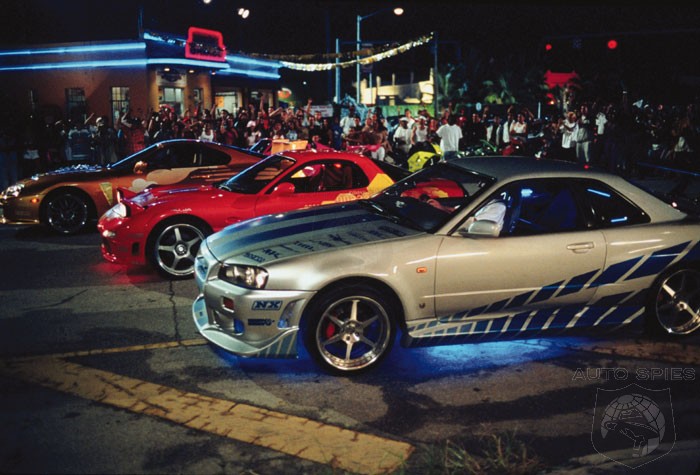 fast and the furious cars
 fast and the furious cars
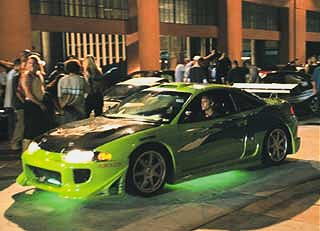 fast and the furious cars
 fast and the furious cars
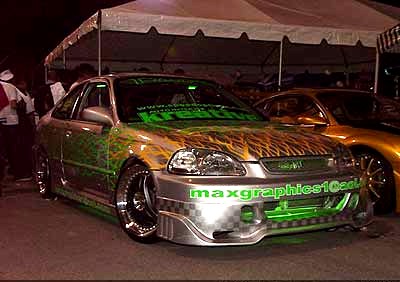 fast and the furious cars


 Fastest Car In The World SSC Ultimate Aero


 Ferrari Enzo
 Jaguar XJ 220
 Pagani Zonda F
 Lamborghini Murcielago
 Porsche Carrera GT


 Fast Cars
 Fast Cars
 Fast Cars


